.svg)
The difference between wedding videography and cinematography is something that gets talked about a lot, but rarely explained in a clear way. The truth is, the terms are often used interchangeably, which makes it confusing when you’re trying to choose the right filmmaker for your day!
Understanding wedding videography vs cinematography is not about deciding which one is better. It’s about knowing what each approach focuses on, how it feels to watch, and what kind of memory you want to come back to years from now.
Neither is right or wrong. They’re simply different ways of telling the same story.

Wedding Videography Explained
To really understand the full picture, it helps to break down the differences between wedding videography and cinematography.
Wedding videography is traditionally focused on documentation and coverage. The goal is to record the day clearly and completely as it unfolds.
Key characteristics of wedding videography often include:
- A strong focus on recording events as they happen
- Real time coverage of the ceremony and key moments
- Minimal stylisation in shooting and editing
- A chronological edit that follows the order of the day
- Priority on capturing everything rather than shaping a narrative
If you want a clear record of the day from start to finish, this approach does that very well.
Wedding Cinematography Explained
So then, what is wedding cinematography?
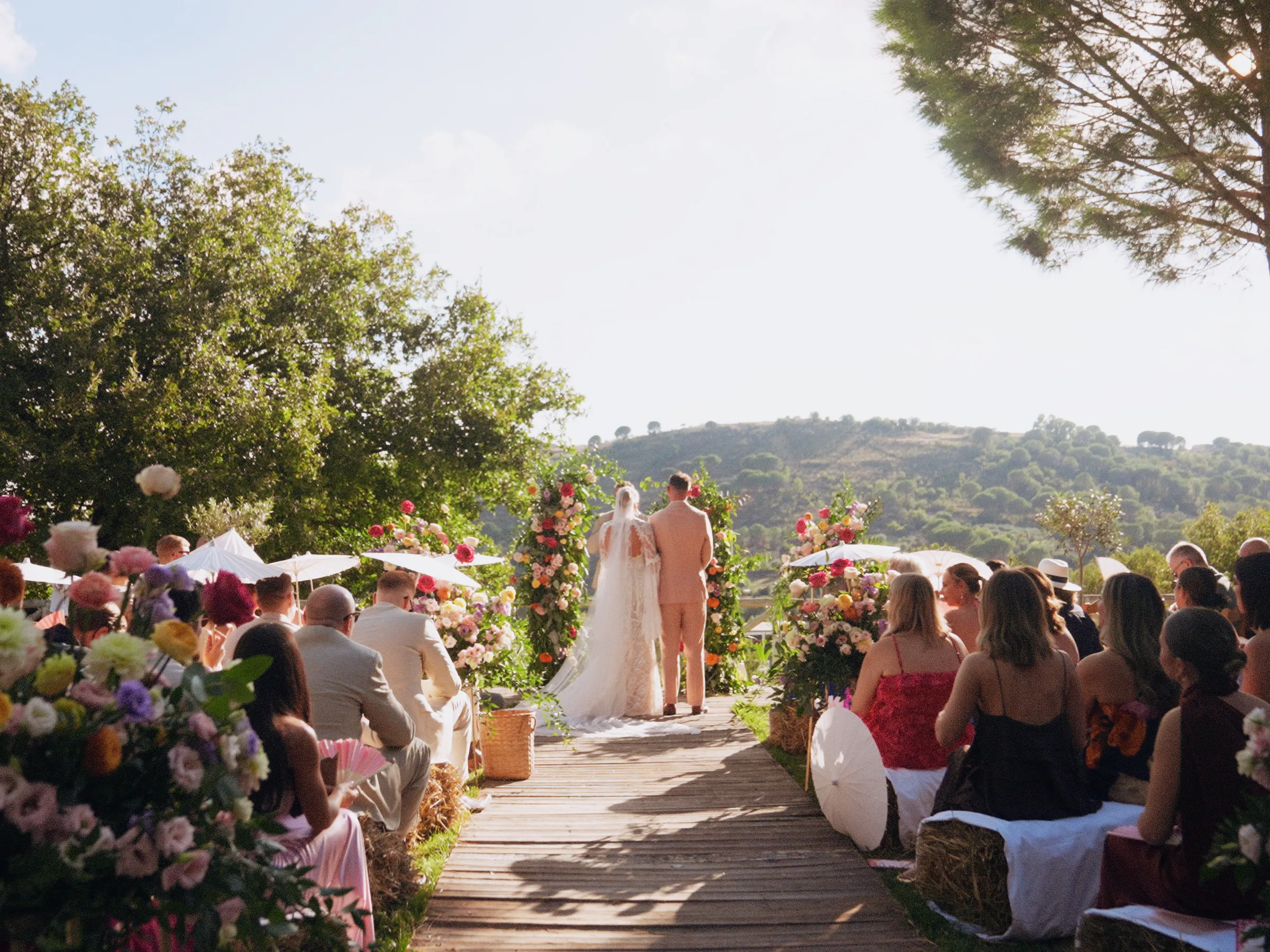
Wedding cinematography takes a more intentional and emotional approach. It is less about recording everything and more about crafting a story that reflects how the day felt.
A wedding filmmaker working in a cinematic style will often focus on:
- Emotion and atmosphere
- Composition and movement
- Light and timing
- Sound design and music
- Editing that feels like a short film
Instead of covering every moment continuously, scenes are filmed with purpose. The edit is shaped around feeling, pacing, and connection rather than strict chronology.
This is where you start to notice the real difference between a cinematic wedding film vs a traditional wedding video.

Style and Storytelling Differences
To understand how cinematic wedding film is different from traditional video, it really comes down to storytelling.
Videography tends to document. Cinematography tends to interpret.
Some of the key differences look like this:
- Documentary coverage vs narrative storytelling
- Static framing versus intentional camera movement
- Clean realism versus mood and tone
- Straight cuts versus layered and rhythmic editing
The difference is how those moments are shaped into a film you will watch again and again.
Gear and Techniques
Gear doesn’t define a style, but it supports it.
Cinematic filmmakers often use cinema cameras and manual lenses to allow more control over depth, texture, and movement. Audio is captured carefully so voices, ambience, and small sounds become part of the story rather than background noise.
In my own work as a Super 8 wedding filmmaker in New Zealand, I also use analogue formats alongside modern digital cameras. Super 8 adds texture and feeling that digital alone can’t replicate, while digital allows for sound, detail, and flexibility.
The tools matter, but only because they support the intention behind the film.

Editing and Why It Changes Everything
This is the part that often gets overlooked, and it is where the difference truly matters.
Wedding videography editing usually prioritises clarity. Moments are shown as they happened, in order, with a focus on completeness.
Wedding cinematography editing prioritises emotion. Pauses are allowed. Silence has meaning. Timing is intentional. The story is shaped through music, breath, and rhythm.
This is where editing makes the difference between simply showing the day and actually telling it.
Wedding Videographer vs Wedding Cinematographer: Which One Makes Sense for You
If you’re unsure, asking yourself a few honest questions can help:
- Do you connect more with feeling or information?
- Do you value emotion over completeness?
- Do you want to relive moments and how they felt or remember the full day?
If you’re wondering whether you need a wedding videographer or a cinematographer, it really comes down to what you want your film to feel like when you press play.
My own approach sits right in between. I film moments as they naturally happen in a documentary way, while also shooting and editing with intention and artistry. It’s a blend of observation and storytelling. My focus is on making a film that’s completely unique and tailored to you, which is why, although my films share a consistent style, each one is truly different from the next.

Q&As
Q: Is wedding cinematography worth it?
A: If you care about emotion, pacing, and storytelling, many people feel it is.
Q: Can a film be both videography and cinematography?
A: Yes. Many modern wedding filmmakers blend the two approaches, documenting real moments while shaping them into a narrative.
Q: Do cinematic films still capture vows and speeches?
A: Absolutely. People often ask, “what should I expect from a wedding cinematographer?” and capturing meaningful audio is a big part of that.
Q: Is wedding cinematography better than videography?
A: It’s not about better or worse. It comes down to the kind of memory you want to revisit when you watch your film back.
Q: What does a wedding cinematographer do?
A: They pay attention to feeling, pacing, and connection, then turn real moments into a unique, tailored film that feels true to you and the day.
If This Feels Right, Let’s Talk
The way a wedding is captured and edited plays a huge role in how those memories age over time. Small choices in pacing, sound, and structure can change how a moment feels years down the line. If you’re ready to talk about your own wedding film, I’d love to hear from you.